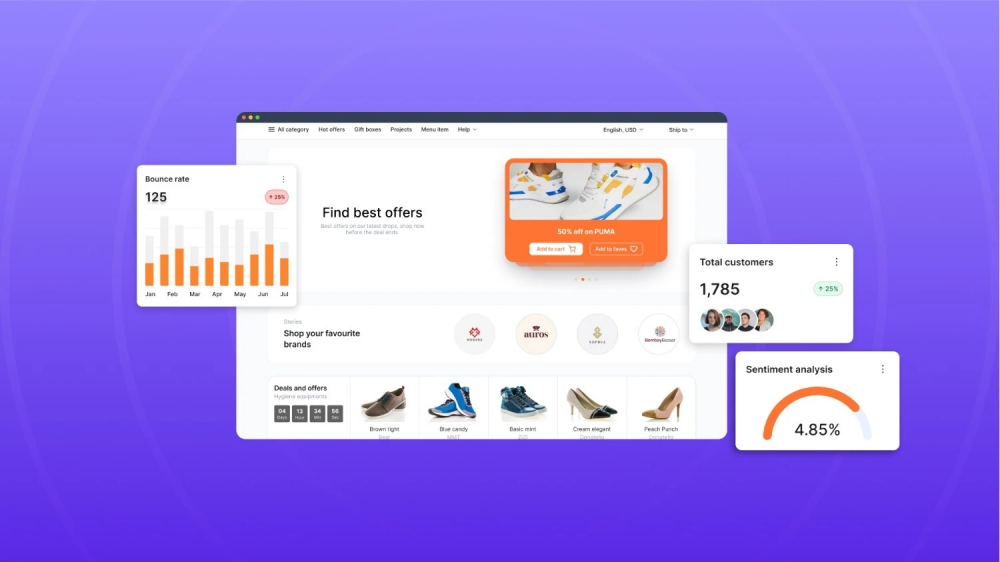
Imagine driving dozens or hundreds of eager visitors to your website, only to watch them turn around and walk away seconds later without clicking a single button.
That experience is the reality of a high landing page bounce rate.
Online marketing relies heavily on landing pages to collect email addresses, introduce new products, and close sales. When people land on your page and leave without taking action, it hurts your conversion rates and wastes your marketing budget.
Understanding what landing page bounce rate means, why people leave, and how to fix it will help you turn casual clicks into loyal subscribers and paying customers.
Understanding Landing Page Bounce Rate
Landing page bounce rate is the percentage of visitors who arrive on your landing page and leave without taking any action.
An action can be clicking a link, filling out an opt-in form, buying a product, or watching a video. If someone arrives on your page, stays for three seconds or three minutes, and then closes the tab or clicks the back button without interacting, that visit is counted as a bounce.
To calculate bounce rate, tracking tools use a simple formula:
Bounce Rate = (Total Single-Page Sessions / Total Visitors) x 100
For example, if 1,000 people visit your page today and 600 of them leave without clicking anything or submitting their email, your landing page bounce rate is 60%.
Bounce Rate vs. Exit Rate
It is easy to confuse bounce rate with exit rate, but they mean different things:
- Bounce Rate: Measures visitors whose entire visit consists of just one page. They arrived on that page and left from that exact same page without viewing anything else.
- Exit Rate: Measures the percentage of visitors who left your website from a specific page after browsing other pages on your site first.
Because landing pages are designed with a single goal in mind—such as signing up for a newsletter or registering for a webinar—bounce rate is the primary metric you need to watch.
Why Landing Page Bounce Rate Matters
Every visitor who bounces represents a missed opportunity. If you run paid advertisements on social media or search engines, high bounce rates mean you are paying for clicks that yield zero returns.
Here is why keeping an eye on this metric is vital for your business:
- Saves Marketing Dollars: Lowering your bounce rate means converting more of the traffic you already have, reducing the cost required to acquire new leads.
- Improves Conversion Rates: When fewer people leave right away, more visitors end up filling out your forms or purchasing your digital products.
- Provides Feedback on Audience Match: A high bounce rate often reveals a disconnect between what your advertisement promised and what your page actually delivers.
- Boosts Search Engine Rankings: Search engines want to show user-friendly content. If visitors bounce from your page in seconds, search algorithms may assume your page is not useful, which hurts your organic search visibility.
What is a Good Bounce Rate for a Landing Page?
Standard multi-page websites usually see bounce rates between 40% and 60%. Landing pages are slightly different because they rarely feature main navigation menus or links to other blog posts. They focus entirely on one call to action.
Because landing pages offer fewer paths to explore, their bounce rates are naturally higher. Here is a general breakdown of landing page benchmarks:
- 70% to 90%: High. This usually points to slow page speeds, confusing design, or a mismatch between your audience and your offer.
- 50% to 70%: Average. Typical for standard landing pages across many industries.
- 30% to 50%: Excellent. Indicates a clear offer, strong headlines, and an interested audience.
- Below 30%: Rare. Usually seen on highly targeted pages, such as private sign-up pages for existing followers.
Keep in mind that context matters. A page offering a free downloadable guide should have a much lower bounce rate than a page asking visitors to purchase a high-ticket coaching program on the spot.
Top Reasons Why Visitors Bounce from Your Landing Page
To fix a high bounce rate, you first need to identify why visitors are walking away. People leave landing pages for several predictable reasons.
1. Slow Loading Speeds
Modern internet users expect pages to load almost instantly. If your page takes more than three seconds to load, a large portion of your traffic will hit the back button before even reading your headline. Large image files, heavy scripts, and bloated page builders are common causes of slow loading times.
2. Confusing Headlines and Poor Message Match
When a user clicks an ad or a social media link, they expect the landing page to deliver on the promise made in that link. If your ad promises a “Free Email Marketing Checklist” but your landing page headline says “Grow Your Digital Empire Today,” visitors get confused. If the message does not match immediately, they leave.
3. Unclear Call to Action (CTA)
If visitors have to scroll around searching for what to do next, you will lose them. A landing page should make the next step completely obvious. Having too many competing buttons or an indistinct form button causes decision fatigue.
4. Asking for Too Much Information
When offering a free resource, asking for a full name, phone number, company size, and physical address creates unnecessary friction. Most visitors will leave rather than fill out a long form.
5. Poor Mobile Experience
A huge portion of web traffic comes from mobile devices. If your landing page looks great on a desktop computer but features tiny text, overlapping images, or unclickable buttons on a smartphone, your mobile bounce rate will soar.
6. Lack of Trust Signals
People are protective of their inbox and payment details. If your landing page looks unfinished, lacks basic branding, or fails to include customer reviews and testimonials, visitors will hesitate to take action.
Practical Steps to Lower Your Landing Page Bounce Rate
Lowering your bounce rate does not require an advanced technical degree or an expensive team of web developers. Simple, practical adjustments can produce significant improvements in visitor engagement.
1. Optimize Your Page Speed
Speed is the foundation of a good landing page. You can boost loading speed by:
- Compressing images before uploading them.
- Removing unnecessary animation scripts and widgets.
- Using clean, simple landing page tools designed for performance.
If you are looking for simple ways to build fast, effective pages without technical bloat, check out our guide on how to build a landing page that converts for digital products.
2. Match Your Headline to Your Source Traffic
Ensure the wording on your landing page mirrors the phrasing in your ad, email, or social media post. Use the exact keywords your audience expects to see. When visitors land on a page and immediately spot the main promise they clicked on, they stay to read more.

Take Your Emails to the Next Level
MailDrip helps you automate your outreach, nurture leads, and grow your brand with ease. Send the right message at the right time—without the stress.
Sign Up FreeNo Card Required
3. Keep Forms Short and Direct
Reduce friction by asking only for what is strictly necessary. For email newsletters and free lead magnets, asking for just an email address (or a first name and email address) works best.
Once visitors enter your funnel, you can learn more about them through automated follow-up sequences. You can read more about streamlining your pages in our post on 9 practical landing page tips for increased conversion.
4. Focus on One Clear Action
Eliminate header navigation links, footer menus, and extra social media icons from your landing page. Every extra link is an exit ramp. Keep the visitor’s focus on one primary button, such as:
- “Download Your Free Guide”
- “Claim Your Free Trial”
- “Save My Spot for the Webinar”
If you are organizing an event, take a look at our webinar landing page template to see how a singular focus drives higher sign-ups.
5. Display Trust and Social Proof
Help visitors feel safe taking action on your page. Include straightforward elements like:
- Short quotes or testimonials from happy readers or customers.
- Real photographs of people using your product.
- Simple statements like “Joined by over 5,000 creators.”
- Clear privacy assurances near the sign-up form.
6. Ensure Seamless Mobile Responsiveness
Test your landing page on multiple smartphones and tablets. Make sure the text is easily readable without zooming, form inputs are large enough to tap comfortably, and the call to action button remains clearly visible on smaller screens.
Connecting Landing Pages to Email Automation
Capturing a lead on your landing page is only the first part of the journey. Once a visitor fills out your form instead of bouncing, what happens next determines whether they become a long-term fan or forget about your brand entirely.
A simple landing page works best when paired directly with automated email delivery. When a visitor submits their details, your platform should immediately send a welcome message containing the promised free download or details.
At MailDrip, we believe building landing pages and managing your audience should be simple and stress-free. You do not need a complex website or bloated software integrations to start collecting leads.
Through our clean, distraction-free platform, creators and small business owners can launch opt-in forms and dedicated pages without technical headaches.
Once your page is live, you can automatically send email sequences, nurture your subscribers, and grow your revenue directly from your dashboard.
You can learn more about built-in tools on our MailDrip features page or explore our flexible plans on the MailDrip pricing page.
How to Track and Measure Your Improvements
You cannot fix what you do not track. Monitoring your bounce rate over time reveals whether your design changes and copywriting tweaks are working.
Here is a simple process to track your progress:
- Establish a Baseline: Check your current bounce rate over the last 30 days before making any changes.
- Make One Change at a Time: If you change your headline, form fields, and background color all at once, you will not know which change improved performance. Adjust one element first.
- Review Traffic Quality: Ensure your traffic comes from sources genuinely interested in your topic. High-volume, irrelevant traffic will always produce high bounce rates.
- Check Performance Periodically: Give your changes a week or two to gather enough visitor data before drawing conclusions.
If you are curious about broader email metrics alongside page performance, explore our article on how to reduce bounce rate in email marketing to keep your entire sales funnel healthy.
Frequently Asked Questions
Is a 100% bounce rate always an error?
While a 100% bounce rate usually signals a broken link, missing tracking code, or an inaccessible page, it can occasionally happen if a page receives very few visits. However, if hundreds of people visit and the rate remains at 100%, check your tracking setup and page functionality immediately.
What is a normal bounce rate for paid ads traffic?
Traffic coming from paid advertisements often produces higher bounce rates (around 60% to 80%) compared to organic search or email traffic. Paid ad visitors are often encountering your brand for the first time, making strong messaging match and fast load times especially critical.
Can I build a landing page without owning a website?
Yes. You do not need a complete, multi-page website to start capturing leads and growing an audience. Modern email platforms allow you to create standalone landing pages hosted directly on their servers.
To learn more about setting this up, check out our step-by-step guide on how to create a great landing page even if you don’t have a website yet.
How does copy length affect landing page bounce rate?
The ideal copy length depends on what you are asking from the visitor. For a simple freebie or newsletter opt-in, short and concise copy usually converts best and keeps bounce rates low. For high-ticket items or complex services, longer sales copy is often necessary to build trust and answer potential objections.
How often should I update my landing page?
Review your landing page performance monthly. If your conversion rate drops or your bounce rate rises, test new headlines, simplified forms, or updated testimonials to refresh engagement.
Turning Bounces into Subscribers
A high landing page bounce rate can feel frustrating, but it is also one of the easiest marketing challenges to solve. By focusing on fast loading speeds, clear headlines, simple opt-in forms, and strong trust signals, you can quickly turn bouncing visitors into engaged subscribers.
Remember, your landing page is just the front door to your business. Once visitors step inside, a clear and helpful automated email sequence builds the relationship that drives long-term success.
If you are ready to replace complicated marketing setups with clean, powerful landing pages and simple email sequences, explore MailDrip today. You can set up your free account, access simple tools, and manage your messaging effortlessly from your MailDrip dashboard.
For more tips on expanding your business through email, feel free to browse the MailDrip blog.
What is the one change you can make on your landing page today to give visitors a better first impression?