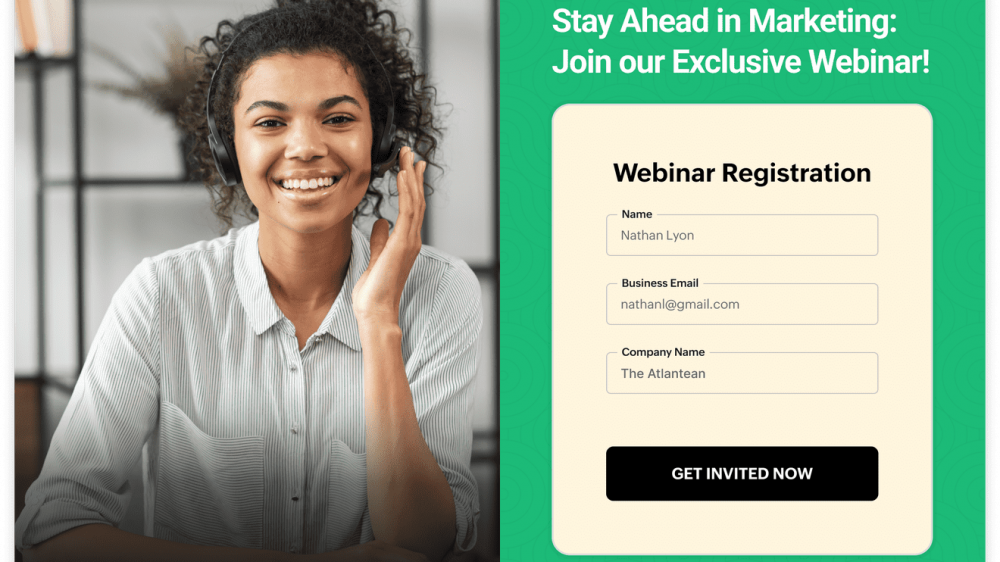
A visitor clicks your link, lands on your page, and decides within five seconds whether to stay or leave.
Design attracts their eye, but the copy makes them take action. When landing page copy feels scattered, confusing, or overly salesy, bounce rates climb and conversions drop.
Writing copy from scratch without a structure often leads to rambling sentences and unclear messages. Copywriting frameworks solve this problem.
These proven psychological blueprints help organize thoughts, address customer pain points, and present offers clearly.
Using a structured framework removes the guesswork, allowing you to build persuasive landing pages that convert visitors into subscribers and buyers.
Here are seven tailored copywriting frameworks designed specifically for high-converting landing pages, along with guidance on when and how to use them effectively.
1. PAS (Problem – Agitate – Solution)
The PAS framework is one of the most reliable formulas in direct-response copywriting. It works by identifying a reader’s specific pain point, highlighting the emotional or practical frustration caused by that problem, and presenting your offer as the ultimate fix.
How PAS Maps to a Landing Page
- Problem (The Headline & Hero Section): State the exact challenge your visitor faces. Use clear, empathetic language so they immediately recognize their own situation.
- Agitate (The Supporting Copy): Expand on the consequences of leaving that problem unsolved. Describe the lost time, wasted money, or daily stress it creates.
- Solution (The Offer & Call to Action): Introduce your product, digital download, or service as the straightforward remedy. Follow it immediately with a bold call to action (CTA) button.
Real-World Example
- Problem: “Spending hours every week manually emailing new subscribers?”
- Agitate: “Every minute you spend copying email addresses and sending manual follow-ups is time lost on growing your business. Leads go cold while they wait for your reply, and sales slip through the cracks.”
- Solution: “Set up automated lead sequences in minutes. Collect emails, nurture prospects, and deliver digital downloads on autopilot.”
Best Use Case
PAS is ideal for short-to-medium sales pages, opt-in pages, and lead magnet landing pages where the audience is already aware of their problem and needs a fast, direct solution.
2. AIDA (Attention – Interest – Desire – Action)
AIDA is a classic framework built around the consumer buying journey. It guides a reader step-by-step from initial curiosity to final decision.
How AIDA Maps to a Landing Page
- Attention (Hero Headline & Banner): Grab attention with a bold statement, intriguing stat, or clear value proposition.
- Interest (Subheadline & Intro Paragraphs): Share fresh insights, interesting facts, or relevant storytelling that keeps the visitor reading.
- Desire (Features & Benefits Section): Show how their life or business improves after using your product. Use bullet points, social proof, and visual mockups to make the outcome tangible.
- Action (Final CTA Section): Tell the user exactly what to do next with a simple, low-friction action step.
Real-World Example
- Attention: “Turn Your Daily Content Into an Email Revenue Engine.”
- Interest: “Most creators lose 80% of their social media audience to changing algorithm updates. Email gives you direct, reliable access to your community.”
- Desire: “Imagine hitting send and seeing sales roll in without spending a dollar on paid ads. Our template library and scheduling tools let you send beautiful emails in minutes.”
- Action: “Claim your free account today and send your first campaign for free.”
Best Use Case
AIDA works exceptionally well for comprehensive product launch pages, course sales pages, and paid membership landing pages.
3. BAB (Before – After – Bridge)
The BAB framework relies on transformation. It paints a picture of the reader’s current situation (Before), contrasts it with their ideal future situation (After), and shows how your offer serves as the path between the two (Bridge).
How BAB Maps to a Landing Page
- Before (Top Section): Describe the reader’s current reality, focusing on current limitations or bottlenecks.
- After (Middle Section): Paint a vivid picture of what success looks like once those obstacles are removed.
- Bridge (Bottom Section & CTA): Present your offer as the bridge connecting where they are to where they want to be.
Real-World Example
- Before: “You spend endless hours struggling with complicated marketing tools, confusing dashboards, and features you never use.”
- After: “Picture launching clean email campaigns in under ten minutes, tracking clicks effortlessly, and watching your audience grow every day.”
- Bridge: “MailDrip gives you a simplified, distraction-free platform to write emails, build landing pages, and capture leads without technical friction.”
Best Use Case
BAB is powerful for digital products, lead magnets, and services. If you are building a page for digital downloads, review this step-by-step guide on how to build a landing page that converts for digital products.
4. QUEST (Qualify – Understand – Educate – Stimulate – Transition)
QUEST is a consultative framework. It establishes authority and rapport before asking for a commitment, making it effective for higher-ticket offers or professional services.
How QUEST Maps to a Landing Page
- Qualify: Call out your target audience immediately (e.g., “For Solopreneurs & Digital Marketers Who Want Simple Growth”).
- Understand: Show that you understand their struggles by sharing relatable experiences or common industry pitfalls.
- Educate: Teach them something valuable right on the page, explaining why traditional solutions fail and what new approach works better.
- Stimulate: Highlight the unique benefits and value of your solution, using customer testimonials or case studies to build confidence.
- Transition: Invite them to take the next logical step, whether that means booking a call, registering for a event, or signing up.
Real-World Example
If you host live training sessions or workshops, check out how this structure powers an effective webinar landing page to convert casual viewers into registered attendees.
Best Use Case
QUEST is ideal for coaching services, high-ticket digital products, consulting applications, and registration pages for webinars or events.
5. PASTOR (Problem – Amplify – Story – Transformation – Offer – Response)
Created by copywriter Ray Edwards, PASTOR puts storytelling at the core of the landing page experience. People connect deeply with stories, making this framework effective for creator-led brands.
How PASTOR Maps to a Landing Page
- Problem: Identify the specific struggle your audience faces.
- Amplify: Explain what happens if the problem remains ignored over time.
- Story & System: Share a relatable story—either your own or a client’s—about overcoming this exact hurdle, introducing the system you developed as a result.
- Transformation: Focus on real-world outcomes rather than basic features.
- Offer: Clearly detail what is included in your product or service package.
- Response: Provide a clear CTA accompanied by risk-reducers like guarantees or simple payment terms.
Real-World Example
- Story Element: “When we started building software, we noticed small business owners spending more time fighting complex campaign tools than speaking to their audience. We decided to build a platform focused entirely on ease of use and deliverability.”
Best Use Case
PASTOR works best on long-form landing pages, sales pages for flagship courses, coaching programs, and personal brand offers.

Take Your Emails to the Next Level
MailDrip helps you automate your outreach, nurture leads, and grow your brand with ease. Send the right message at the right time—without the stress.
Sign Up FreeNo Card Required
6. The 4 P’s (Picture – Promise – Prove – Push)
The 4 P’s framework relies on strong imagery and social proof to move readers toward action quickly.
How 4 P’s Maps to a Landing Page
- Picture: Paint a clear visual picture in the hero section through copy and graphics.
- Promise: Make a bold, clear commitment about what your product will deliver.
- Prove: back up your claims with social proof, customer reviews, performance metrics, or screenshots.
- Push: Encourage immediate action by emphasizing clear incentives, simplicity, or limited availability.
Real-World Example
- Picture: “Imagine opening your dashboard every morning to see fresh subscriber signups and automated sales notifications.”
- Promise: “MailDrip lets you capture leads, send targeted drip sequences, and track clicks without technical headaches.”
- Prove: “Trusted by thousands of creators, digital marketers, and growing businesses worldwide.”
- Push: “Create your free account today and start reaching your audience immediately.”
Best Use Case
The 4 P’s framework shines on visual product showcase pages, tool signups, and app landing pages.
7. FAB (Features – Advantages – Benefits)
FAB turns functional features into emotional, practical benefits. Many creators make the mistake of listing technical details without explaining why those details matter to the buyer. FAB fixes that gap.
How FAB Maps to a Landing Page
- Features: Describe what the product does or includes (e.g., “Direct Gmail integration”).
- Advantages: Explain why that feature matters functionally (e.g., “Send emails directly using your existing Google account without configuring complex mail servers”).
- Benefits: Highlight the real-world impact for the user (e.g., “Save time, avoid setup stress, and get your messages straight into your customer’s main inbox”).
Feature vs. Advantage vs. Benefit Comparison
- Feature: Built-in opt-in forms and landing page creation tools.
- Advantage: Build custom capture pages directly inside your dashboard without buying extra website builders.
- Benefit: Launch your campaign faster and keep your monthly tool costs low.
Best Use Case
FAB is perfect for software landing pages, SaaS products, digital toolkits, and feature release pages.
Combining Copywriting Frameworks with Good Landing Page Design
A solid framework gives your landing page structure, but design and execution bring it to life. To get the best conversion rates, keep these practical optimization tips in mind:
- Keep Typography Clean and Readable: Breakdown long paragraphs into short, digestible sentences. Use bolding to highlight key takeaways so skimmers capture the main message.
- Optimize CTA Button Colors: Make sure your primary CTA button stands out visually against your background color. For a breakdown of color choices and conversion psychology, read about the best call to action colors to increase email marketing and landing page conversions.
- Eliminate Unnecessary Navigation: A landing page should have one clear focus. Remove main menu headers or external links that pull visitors away from your main CTA.
- Refine Page Flow: For more design and layout strategies, browse through these 9 practical landing page tips for increased conversion.
Turn Landing Page Visitors into Long-Term Subscribers with MailDrip
Writing great landing page copy is only half the formula. Once visitors decide to sign up, you need a reliable way to capture their information, deliver promised resources, and nurture those relationships over time.
You do not need a complex, expensive tech stack or an engineering degree to build pages that turn visitors into subscribers.
At MailDrip, we built an email marketing platform specifically for creators, solopreneurs, digital marketers, and small business owners who want tools that work reliably without extra clutter.
Here is how MailDrip helps you execute your landing page strategies without friction:
- Landing Pages Out of the Box: You do not even need a standalone website to start gathering leads. MailDrip allows you to create high-converting landing pages and opt-in forms directly inside the platform. Read more on how to create a great landing page even if you don’t have a website yet.
- Automated Drip Sequences: When a new lead signs up through your landing page, set up an automated email drip campaign to send welcome messages, deliver lead magnets, or pitch your products on autopilot.
- Flexible Email Capacity via Gmail Integration: Connect your Gmail account directly to your dashboard to send up to 500 emails daily for personal accounts, or boost your capacity up to 2,000 emails daily with a business workspace account. No complex server setups required.
- Pay Only for What You Need: Forget forced monthly commitments if your business is just getting started. Our Pay As You Go (PAYG) option lets you buy email credits as you grow. Plus, our free plan includes 1,000 free emails with unlimited contacts right out of the box. Check out transparent options on our pricing page.
- Clean, Focused Features: Enjoy a calm, distraction-free space to write emails and organize campaigns. Explore all built-in capabilities on our features page.
- Human-First Support: If you ever run into a question, our support team is available 24/7 via chat, email, and WhatsApp to offer real assistance.
Whether you are launching your first lead magnet or managing ongoing sales campaigns, you can manage everything seamlessly from the MailDrip dashboard.
Frequently Asked Questions (FAQs)
Which copywriting framework is best for beginners?
The PAS (Problem – Agitate – Solution) framework is usually the easiest for beginners. It follows a straightforward linear structure: identify what hurts, explain why it hurts, and show how your product solves it.
Can I mix different copywriting frameworks on one landing page?
Yes. It is common to combine framework elements on long-form landing pages. For instance, you might use AIDA for the overall structure of the page, but apply FAB (Features – Advantages – Benefits) inside your product features section.
How long should landing page copy be?
Copy length depends on the ask. Low-friction offers like free ebooks, newsletter signups, or simple templates work best with short, direct copy. Higher-ticket items like premium courses, coaching programs, or complex software require longer copy to address objections and establish trust.
Do I need a website to launch a landing page?
No. Tools like MailDrip provide standalone landing pages and opt-in forms natively, allowing you to capture email signups and deliver drip emails without paying for separate web hosting or site builders.
How often should I test different landing page headlines?
Testing copy regularly helps optimize performance. Start by testing your main headline and CTA button text. Run a test until you gather enough visitor traffic to see a clear winner before tweaking secondary paragraph copy.
Which copywriting framework best fits your current landing page offer, and what is the main change you will make to your page today?
If you are ready to turn your copy into signups and sales without technical stress, explore educational guides on the MailDrip blog or create your free account today to start growing your audience.