Imagine you find a way to talk to every single customer at the exact moment they are most interested in your business.
When they first sign up, you send them a friendly hello. A few days later, you share a helpful tip. Next week, you send them a special discount on a product they just viewed.
The best part? You do all of this while you are asleep, out having lunch, or working on other parts of your business.
This is the power of a drip campaign. Instead of sending one massive email blast to everyone on your list and hoping for the best, a drip campaign sends automated, targeted messages over time based on how people interact with your brand.
Choosing the right tool to handle this can be tough. The market is full of software that promises to solve all your problems but ends up giving you a massive bill and a headache from overly complicated setups.
Let us look at the best drip campaign software options available today to help you boost engagement, nurture your leads, and grow your sales without the stress.
What is a Drip Campaign and Why Does it Matter?
A drip campaign is a series of automated emails sent to people who take a specific action on your website or landing page.
For example, when someone downloads a free guide, they trigger a sequence. Email one goes out instantly with the download link. Email two arrives two days later with a case study. Email three arrives three days after that with an offer to buy a digital product.
Using automated paths changes everything for small businesses, creators, and marketers. It saves you from manual labor because you write the emails once, set up the triggers, and let the software do the work. It also builds deep trust. People do not buy from brands they just met. By showing up in their inbox regularly with helpful information, you become a trusted friend.
Best of all, it keeps your audience active. Regular, relevant communication stops people from forgetting who you are, keeping your engagement and open rates healthy.
The 5+ Best Drip Campaign Software to Boost Engagement
Here is a breakdown of the top tools to build your automated email sequences, looking closely at what they do best, who they are for, and what they cost.
1. MailDrip

Best for: Creators, solopreneurs, digital marketers, and personal brands who want simplicity, high performance, and affordable pricing.
MailDrip was built because most email tools became too bloated and complicated. Instead of building software for massive enterprises with giant tech teams, MailDrip focuses on the exact features you need to write freely, connect with your audience, and build automated revenue streams.
Key Features:
- Clean, Distraction-Free Interface: You do not need a marketing degree or an engineering background to use it. You can build your email automation workflow without getting lost in endless menus.
- Built-in Landing Pages and Forms: You do not even need your own website to start building an audience. MailDrip gives you beautiful landing pages and opt-in forms right out of the box.
- Pay As You Go (PAYG) Pricing: If you do not want a rigid monthly contract, you can simply buy email credits and use them when it makes sense for your business layout.
- Incredible Deliverability: The team focuses heavily on technical performance so that your automated emails land directly in the inbox, not the spam folder.
- Real Human Support: You get access to 24/7 help via chat, email, and WhatsApp from real people who want to see you win.
Pricing:
MailDrip offers a generous free plan that gives you 1,000 free emails and unlimited contacts so you can test things out safely. From there, you can choose flexible monthly plans or convenient Pay As You Go options based on your exact usage.
2. MailerLite
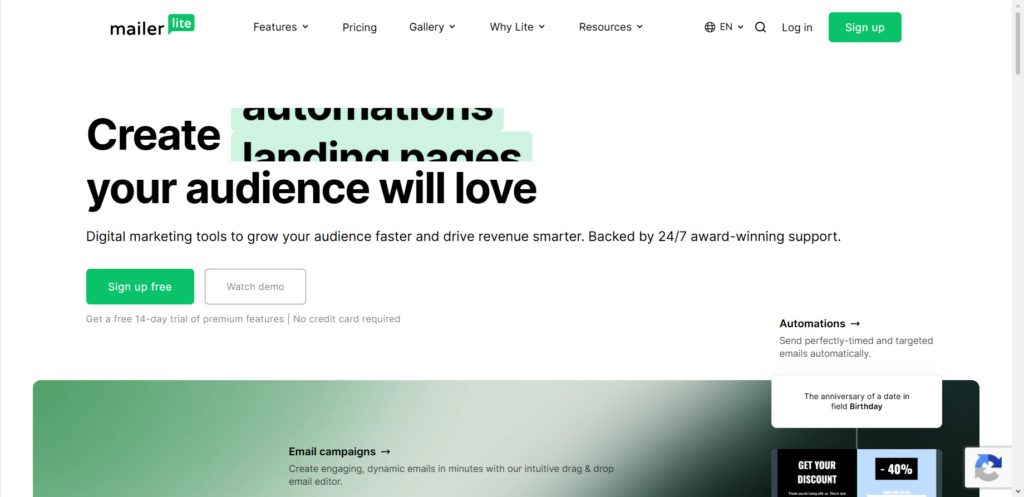
Best for: Beginners who want a visual campaign builder on a budget.
MailerLite is well-known for being easy to use while offering solid automation tools for growing businesses. It provides a clean balance between an easy layout and decent feature depth.
Key Features:
- Drag-and-drop automation builder that makes it easy to visualize your drip sequences.
- Basic website and landing page builders.
- A/B split testing to see which subject lines get better results.
The Downside:
As your subscriber list grows, the monthly price climbs steadily. Some users also report that their account approval process can be strict and confusing for new accounts.
3. ConvertKit (Kit)
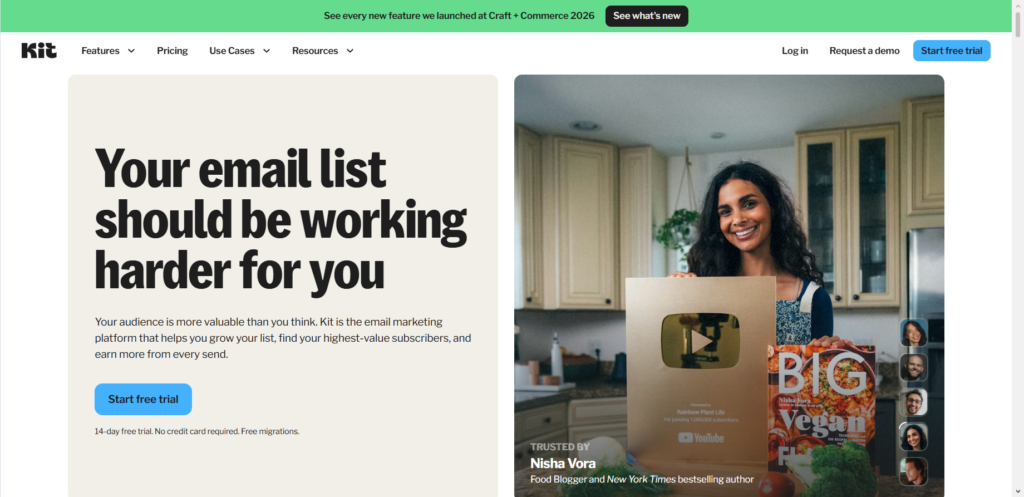
Best for: Professional bloggers, authors, and podcasters who run content-heavy businesses.
ConvertKit, which recently rebranded to Kit, is built specifically with creators in mind. It uses a subscriber-centric model, meaning it organizes your list by tags rather than separate lists.
Key Features:
- Visual automation rules based on user behavior and tags.
- Simple text-based email editors that feel personal.
- Creator network integrations to help you cross-promote with other writers.
The Downside:
The software can feel expensive if you are just starting out. The template designs are heavily focused on plain text, which might not work well if you want to send highly visual product emails.
4. ActiveCampaign
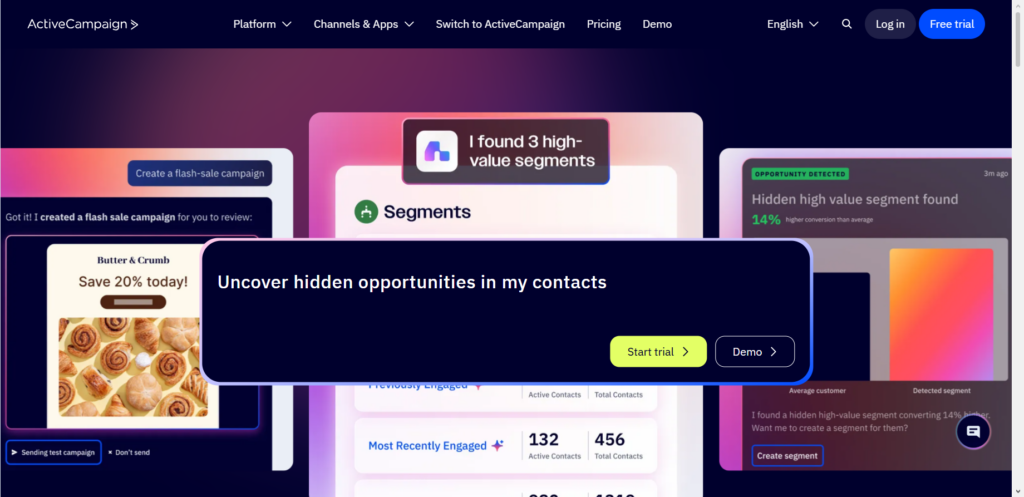
Best for: Advanced marketers who need deep data tracking and complex CRM tools.
ActiveCampaign is a heavy-duty platform that combines email marketing with a sales CRM. It allows you to build incredibly detailed automation paths based on almost any action a user takes on your site.
Key Features:
- Extremely powerful automation maps.
- Site tracking that monitors exactly what pages subscribers visit on your website.
- Built-in sales pipeline management for sales teams.
The Downside:
It has a massive learning curve. If you just want to send a simple 5-part welcome sequence to your subscribers, ActiveCampaign will feel like trying to fly a commercial airplane when you only need a bicycle. It is also one of the most expensive choices on the market.

Take Your Emails to the Next Level
MailDrip helps you automate your outreach, nurture leads, and grow your brand with ease. Send the right message at the right time—without the stress.
Sign Up FreeNo Card Required
5. Brevo (Formerly Sendinblue)
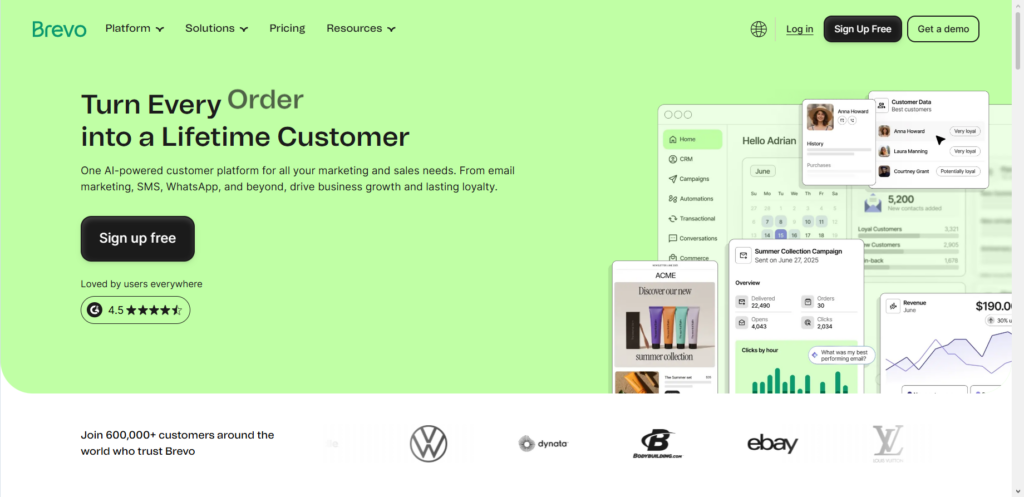
Best for: Growing businesses that want to mix email drip campaigns with SMS marketing.
Brevo offers a mix of communication tools, allowing businesses to send transactional emails, marketing emails, and text messages from a single platform.
Key Features:
- Pricing based on the volume of emails sent rather than the number of contacts you hold.
- SMS and WhatsApp marketing integration options.
- Basic signup forms and page templates.
The Downside:
The interface can feel a bit clunky and slow to load. Setting up advanced logic for your drip campaigns takes longer compared to cleaner, more modern platforms.
6. GetResponse
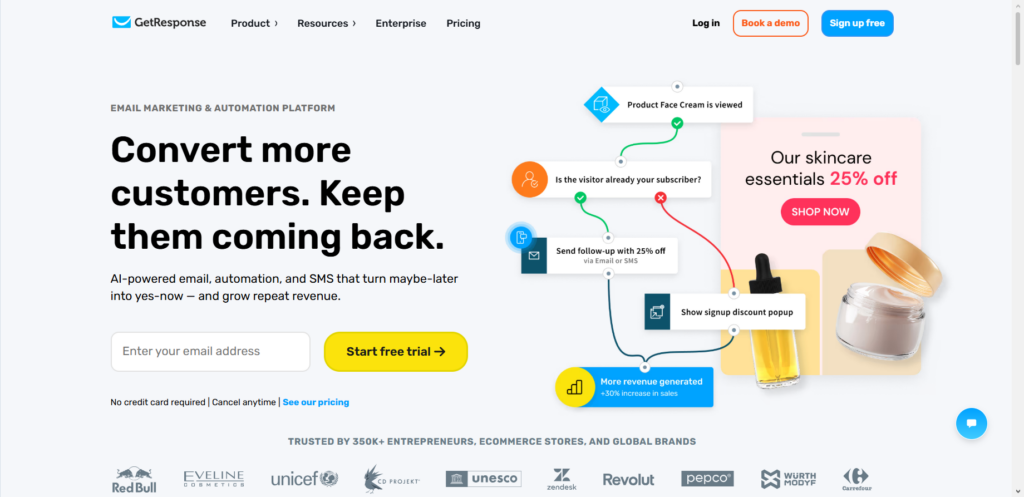
Best for: Inbound marketers who want to include automated webinars in their funnel plans.
GetResponse has evolved from a basic email tool into an all-in-one marketing machine that includes funnel builders and webinar hosting.
Key Features:
- “Conversion Funnel” feature that visualizes your entire sales journey.
- Live and evergreen webinar hosting directly inside the tool.
- AI-assisted email generator options.
The Downside:
Because it tries to do everything, individual pieces like the email editor can sometimes feel less polished. The pricing tiers change quickly depending on which features you unlock.
How to Choose the Right Software for Your Brand
With so many choices, it is easy to get stuck trying to make a decision. To find the right fit, use these simple criteria:
Avoid Feature Bloat
Many platforms charge you for deep predictive analytics, lead scoring, and massive sales pipelines. If you are a creator or small business owner, you do not need that noise. Look for a clean tool that lets you set up an email drip campaign easily without making you click through dozens of menus you will never use.
Look at List vs. Volume Pricing
Some tools charge you based on how many subscribers you have. If you have 5,000 subscribers but only email them once a month, you are still stuck paying a high price tier. Look for platforms with flexible pricing models—like a free tier or a Pay As You Go option—so your marketing expenses match your real business actions.
Check the Building Blocks
If you do not have an expensive website or a landing page builder like WordPress or Shopify, make sure your drip software provides built-in forms and landing pages. This saves you money and ensures that when someone inputs their email address, they instantly enter your drip sequence without any broken connections.
Step-by-Step: How to Launch Your First Drip Campaign
Once you choose your platform, setting up your first sequence is simple. Let us break down how to create a highly successful welcome email sequence to turn new subscribers into fans.
[Subscriber Opts In]
       │
       ▼
(Instant) ───► Email 1: Deliver Value & Say Hello
       │
  (Wait 2 Days)
       │
       ▼
(Day 2)   ───► Email 2: Share Useful Tip or Story
       │
  (Wait 3 Days)
       │
       ▼
(Day 5)   ───► Email 3: Present Your Best Solution/Offer
Step 1: Define Your Goal
What do you want this specific sequence to do? Do you want to onboard a new user, nurture an affiliate marketing lead, or sell a digital download? Pick one clear goal before writing a single word.
Step 2: Write Your Sequence
A classic, high-converting 3-part sequence looks like this:
- Email 1 (Sent instantly): Deliver the free item you promised, welcome them to your world, and tell them what to expect next.
- Email 2 (Sent 2 days later): Share a massive piece of value. Give away a top tip, share a helpful story, or link to a great resource without trying to sell anything.
- Email 3 (Sent 3 days later): Introduce your product or service. Explain the problem it solves and give them a clear reason to take action now.
Step 3: Set Up Your Trigger
In your software dashboard, create a new automation. Set the trigger to “When a subscriber joins list X” or “When tag Y is added.” Connect your written emails to this trigger and add time delays between them.
Step 4: Test and Activate
Send a test version of the sequence to your own inbox to make sure formatting looks clean and links work correctly. Once it looks good, hit activate. Your automated system is now live and working for you.
Comparison Table: Best Drip Campaign Tools at a Glance
| Software | Best Used For | Pricing Structure | Complexity Level |
| MailDrip | Creators, Marketers, Solopreneurs | Free tier (1,000 emails) / PAYG / Affordable monthly | Very Low (Clean & Focused) |
| MailerLite | General Beginners | Subscriber-based monthly tiers | Low to Medium |
| Kit (ConvertKit) | Bloggers & Authors | Subscriber-based monthly tiers | Medium |
| ActiveCampaign | Enterprises & Sales Teams | High monthly subscription costs | High (Steep learning curve) |
| Brevo | Multi-channel SMS/Email | Email-volume based monthly tiers | Medium |
| GetResponse | Funnel & Webinar Users | Feature & Subscriber-based monthly tiers | Medium to High |
FAQs About Drip Campaign Software
What is the difference between an email newsletter and a drip campaign?
An email newsletter is a single broadcast sent to your list all at once (e.g., a weekly update). A drip campaign is a pre-written series of emails sent automatically to individual subscribers based on their specific sign-up date or actions.
How long should I wait between sending drip emails?
For most welcome or nurturing sequences, waiting 2 to 3 days between emails is ideal. This keeps your brand fresh in their mind without crowding their inbox. For intensive courses or live launches, you might send emails daily.
Can I set up a drip campaign without a website?
Yes. If you choose a platform like MailDrip, you get built-in landing pages and opt-in forms. You can share the link to your landing page directly on social media profiles to collect subscribers and launch your drip sequences instantly.
How do I know if my drip campaign is working?
Keep an eye on three core metrics: your open rate (how many people view your emails), your click-through rate (how many click your links), and your conversion rate (how many take the final action, like buying a product). High opens mean good subject lines; high clicks mean engaging content.
Simplify Your Growth Strategy
Building a deep connection with your audience does not mean spending hours coding automation flows or paying hundreds of dollars for features you never touch. It is about sharing the right message with the right person at the perfect moment.
At MailDrip, we cut out the confusion. We built a calm, straightforward email marketing space designed to help you launch high-performing drip campaigns, capture leads through custom forms, and protect your sender score with incredible deliverability.
Whether you are launching your first personal brand or managing multiple client funnels, you can step away from bloated software. Create your account on the MailDrip Dashboard today to see how clean and stress-free email marketing can be.
If you could automate just one repetitive conversation with your customers today to save time and build trust, what would you want that email sequence to say?